5 Steps How to Check Your AC Before Calling for Repair (Easy Guide for Inland Empire Homeowners)
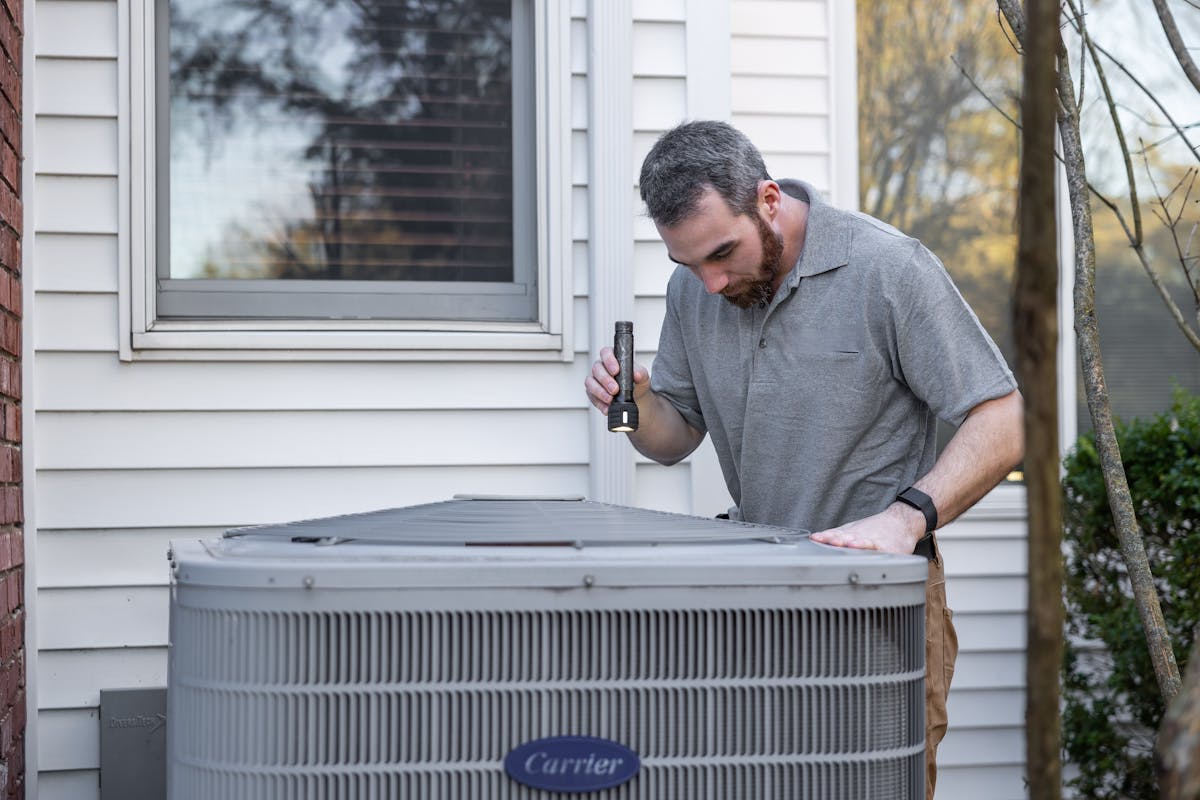
When the Inland Empire heat pushes past 100°, a small AC problem can quickly turn into a very uncomfortable afternoon. Before calling for repair, run through five safe checks: thermostat, airflow, power, drainage, and the outdoor unit.
These steps may restore cooling when the issue is minor. If they do not, the information gathered will help a technician diagnose the problem faster.
Safety first: Do not open electrical panels, handle refrigerant, bypass safety switches, or work on internal components. Turn the system off if there is smoke, a burning smell, exposed wiring, loud mechanical noise, or water near electrical equipment.
Step 1: Check the Thermostat
Confirm the system is calling for cooling
Start with the thermostat. Many apparent AC failures come from an incorrect setting, a blank display, or weak batteries.
Check the following:
- Mode is set to COOL
- Fan is set to AUTO for normal operation
- Set temperature is at least 5°F below the current room temperature
- Thermostat display is on and responding
- Batteries are fresh, if the thermostat uses batteries
After adjusting the settings, wait several minutes. The indoor blower should start, followed by the outdoor condenser.
If the thermostat is blank, check whether the rest of the home has power. A lamp or another appliance can confirm whether there is a broader outage.
Some systems also have a light-switch-style service switch near the indoor furnace or air handler. It may have been turned off accidentally. Confirm that it is on: but do not remove covers or touch wiring.
Still no response? Move to the airflow and power checks below. If the thermostat is working but the home is not cooling, note whether the system is blowing warm air, blowing weakly, or not blowing at all.
Step 2: Check the Filter and Vents

Restore airflow before the system works harder
A dirty air filter restricts airflow through the system. In the Inland Empire, where air conditioners may run for long stretches during desert heat, restricted airflow can contribute to weak cooling, frozen coils, higher energy use, and system shutdowns.
Find the filter at one of these common locations:
- A large return-air grille
- The indoor furnace
- The air handler
- A filter cabinet near the equipment
Hold the filter up to a light. If very little light passes through, replace it with the correct size and type. Check the dimensions printed on the filter frame before purchasing a replacement.
Then walk through the home and check the vents:
- Supply vents should be open
- Return grilles should not be blocked
- Furniture, curtains, boxes, and rugs should not restrict airflow
- Multiple rooms should have a reasonable flow of conditioned air
After replacing a clogged filter and clearing blocked vents, run the system for 10 to 15 minutes. Check whether the airflow feels stronger and whether the air begins to cool.
A filter change is a homeowner task. It does not correct problems such as a failed blower motor, duct leakage, frozen evaporator coil, or low refrigerant. If airflow remains weak, schedule AC repair service with AirNova Tech.
Step 3: Check the Breaker and Disconnect
Reset power only once
If neither the indoor nor outdoor unit runs, check the electrical power supplying the system.
At the home’s electrical panel, look for breakers labeled:
- AC
- Condenser
- Air handler
- Furnace
A tripped breaker may sit between the ON and OFF positions. If that is the case, move it fully to OFF, wait about 30 seconds, and move it back to ON.
Reset the breaker one time only.
If it trips again, leave it off and call a licensed technician. Repeatedly resetting a breaker can worsen an electrical fault and creates a safety risk.
There is usually also an outdoor disconnect near the condenser. It may look like a small gray box mounted to the wall. Confirm that it has not been switched off, but do not open the box or reach inside.
Some indoor systems have a condensate float switch. If water backs up in the drain pan, this safety device can shut the AC down to prevent water damage. Never bypass the switch. Standing water near the indoor unit is a reason to turn the system off and request service.
AirNova provides 24/7 emergency HVAC dispatch for no-cool situations throughout communities including Murrieta, Temecula, Menifee, Wildomar, Lake Elsinore, Hemet, Corona, and Perris.
Step 4: Look for Drainage Problems or Ice

Turn the system off when warning signs appear
Air conditioners remove moisture from indoor air. That moisture travels through a condensate drain line, commonly made from white PVC pipe. A clogged drain can cause water to collect in the pan or trigger a float switch.
Look for:
- Water around the indoor unit
- A full or overflowing drain pan
- Water dripping from an unexpected location
- Algae or debris near the drain outlet
- A system that shuts off after running for a while
If water is backing up, turn the AC off. A homeowner who is comfortable using a wet/dry vacuum may be able to clear an accessible drain opening, but do not pour chemicals into the system or dismantle equipment.
Also inspect the visible refrigerant lines for ice. Ice may appear on the copper line near the indoor coil or at the outdoor unit. It usually indicates an airflow restriction, low refrigerant, or another problem that requires diagnosis.
If ice is present:
- Turn the cooling system off.
- Set the thermostat fan to ON only if the blower operates normally.
- Allow the ice to melt completely.
- Do not scrape or chip the ice.
- Do not restart cooling if water could contact electrical equipment.
Thawing the system does not fix the cause. If the ice returns, the filter is clean, and the vents are open, professional testing is needed. Refrigerant diagnostics require specialized tools and trained handling. AirNova technicians use manifold gauge readings, low-side and high-side pressure checks, and post-repair system verification rather than replacing parts by guesswork.
For general background on common AC problems and when professional service is required, see this AC repair guide from Carrier.
Step 5: Inspect the Outdoor Unit
Keep the condenser clear and listen carefully
The outdoor condenser releases heat from the home. It needs open space around the cabinet to operate correctly.
From a safe distance, check for:
- Leaves, grass, trash, or heavy dust on the unit
- Plants or stored items crowding the cabinet
- A blocked top grille
- Bent or visibly damaged fins
- An outdoor fan that does not run when cooling is requested
Keep roughly 2 feet of clearance around the unit where possible. Remove loose debris by hand only when the system is off. Do not use a pressure washer or sharp tools on the fins.
If the cabinet is dirty, gentle rinsing may help: but shut off power to the system first, and never spray electrical components directly. When there is any uncertainty, leave cleaning to a technician.
Listen for unusual sounds:
- Grinding
- Screeching
- Banging
- Repeated clicking
- Loud humming
- A fan that starts and stops
Turn the system off if these sounds occur. Continuing to run a failing motor, capacitor, or compressor can increase the damage.

What to Tell the HVAC Technician
A clear description speeds up diagnosis
If the five checks do not restore cooling, collect a few details before calling:
- Is the indoor blower running?
- Is the outdoor fan running?
- Is the air warm, slightly cool, or not moving?
- When did the problem begin?
- Was the system making a new noise?
- Did a breaker trip?
- Was ice or water visible?
- Was the filter dirty?
- Does the system start and stop repeatedly?
A technician will typically confirm the thermostat call, inspect airflow, test electrical components, check refrigerant pressures, inspect the drain system, and verify performance after the repair.
AirNova’s process is built around measured diagnosis. Technicians explain the problem, provide upfront pricing before approved work, and complete most common repairs during the initial visit when the required part is available.
When to Call for AC Repair
Call a licensed HVAC professional without delay when:
- The breaker trips again after one reset
- There is a burning smell, smoke, or exposed wiring
- The system has loud or abnormal mechanical noise
- Ice returns after the system thaws
- Water is overflowing near the indoor equipment
- The outdoor fan does not operate
- The AC runs but produces warm air
- The system repeatedly shuts off
- Cooling remains weak despite a clean filter and open vents
AirNova Tech, LLC is a C20 California-licensed, bonded, and insured HVAC company with 14 years of Southern California experience and more than 3,400 systems serviced.
No cool air? Start with the five checks. If the problem remains, call AirNova at (949) 969-0222. Same-day appointments are available most weekdays, and the emergency line is answered 24/7 by real technicians.